
Building a mother-in-law suite is one of the smartest ways to add flexible living space to a home. For most homeowners, the goal is simple. Keep family close, preserve privacy, and avoid future headaches with zoning, design, or resale. The challenge is that many projects fail not because of construction, but because of poor planning and misunderstandings about what an in-law suite actually is.
This guide focuses on how to plan, design, and build a mother-in-law suite that works long term. Not just something that looks good on paper, but something that functions well for aging parents, adult children, or guests.
What a Mother-In-Law Suite Really Is
A mother-in-law suite is a private living space on the same property as the main home. It usually includes a bedroom, bathroom, and some form of kitchen setup. The key point is independence. The occupant should be able to live comfortably without relying on the main house for daily needs.
Some in-law suites qualify as Accessory Dwelling Units (ADUs). Others do not. That distinction matters for legal permits, rentals, and resale value.
In many areas, including parts of Pasadena, MD, the legal definition depends on features like a full kitchen, a private entrance, and whether the unit can be rented separately. The label homeowners use is less important than how the city classifies the space.
Where People Get Confused About the Difference
This is where most mistakes happen.
Many homeowners use these terms interchangeably:
- Mother-in-law suite
- In-law apartment
- ADU
They are not always the same thing.
An in-law suite describes how the space is used.
An ADU describes how the space is regulated.
A space can be an in-law suite without being a legal ADU. That is fine for family use, but it often limits rental options and resale flexibility. Clearing this up early prevents expensive redesigns later.
Choosing the Right Type of In-Law Suite
The best layout depends on budget, lot size, and who will live there. Each option has tradeoffs.
1. Interior Conversions
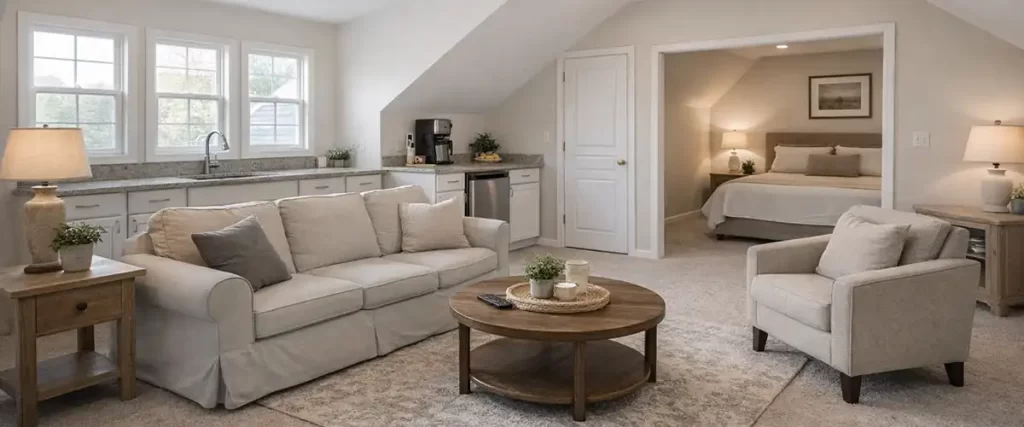
Interior conversions use space that already exists. This is often the lowest-cost path.
Basements are the most common option. They usually have enough square footage for a bedroom, bathroom, and small living area. Ceiling height, lighting, and proper egress are the usual obstacles.
Spare bedrooms or unused wings can also work, especially when plumbing is nearby. These conversions tend to move faster because fewer structural changes are required.
Attics offer privacy, but stairs and limited access make them a poor choice for aging parents. Interior conversions can work well, but they often require more upgrades than homeowners expect to meet code.
2. Attached Additions
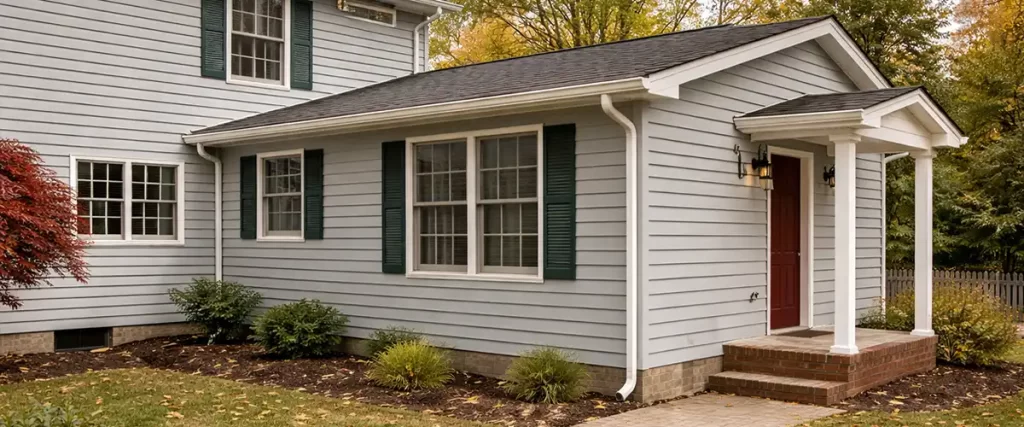
Attached additions expand the home with a new, dedicated living space.
They allow for a custom layout while keeping family members close. Many attached suites share utilities with the main house, which can reduce complexity and cost.
This setup works well when caregiving is part of the plan. Access is easier, but privacy is still maintained.
When designed properly, an attached suite feels like part of the original home rather than an add-on.
3. Detached Units
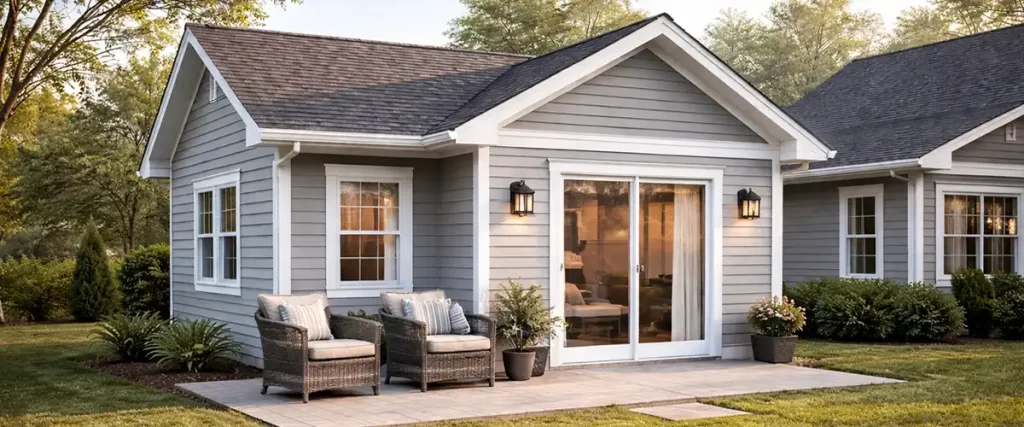
Detached units offer the most privacy and independence.
Converted garages or sheds are common starting points. The structure already exists, which can reduce framing costs.
Some homeowners choose to build a detached unit from scratch. These often feel like small guest houses or cottages.
Detached suites usually face stricter zoning requirements, but they are more likely to qualify as legal ADUs. That flexibility matters for long-term value.
4. Prefabricated Units
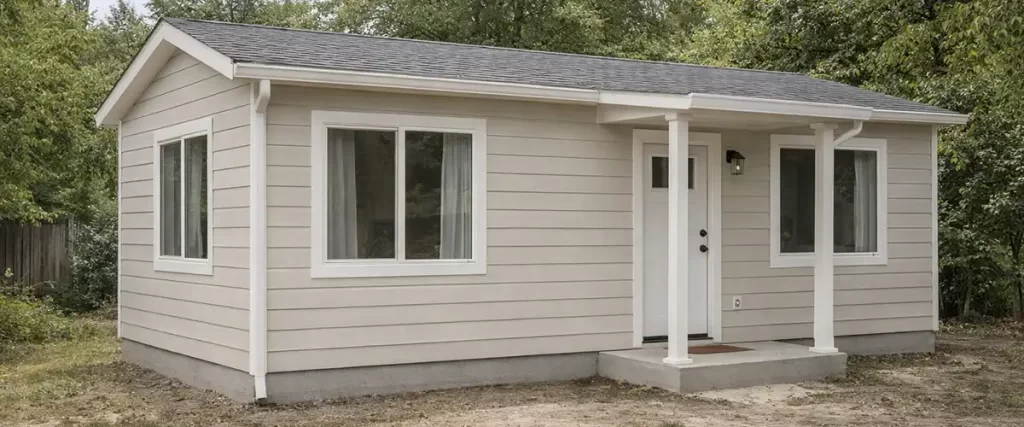
Prefabricated in-law suites are built off-site and delivered mostly complete.
They appeal to homeowners who want a faster timeline and more predictable pricing. Once permits are approved, installation can move quickly.
Customization is limited. Layouts and finishes are usually fixed.
These units work best when zoning rules are clear, and site access is simple.
Mother-In-Law Suite Cost Expectations and Budget Reality
Costs vary widely based on scope, finishes, and local labor rates.
Typical ranges:
- Room conversion: $10,000 to $100,000
- Basement or garage conversion: $25,000 to $75,000
- Prefabricated unit: $40,000 to $85,000
- Detached custom build: $70,000 to $300,000 or more
In markets like Anne Arundel County, permitting, utility connections, and inspections often add more than homeowners expect. Budgeting with a buffer is not optional.
Many families compare this cost to assisted living or long-term care. Over time, a well-built in-law suite often proves more economical while preserving family connection.
Zoning, Permits, and Rules That Matter
Before designing anything, verify local regulations.
Common requirements include:
- Zoning approval for additional dwelling units
- Building, plumbing, and electrical permits
- Setback and height restrictions
- Parking requirements
- Owner-occupancy rules
- HOA approval, if applicable
Skipping this step is the fastest way to stall a project. Even small changes like adding a kitchenette can trigger new permit requirements.
Designing for Aging, Privacy, and Daily Comfort
A good mother-in-law suite supports independence today and mobility tomorrow.
Accessibility Basics
Accessibility should be planned early, not added later.
Ground-floor living is preferred whenever possible. It reduces fall risk and removes the need for stairs.
Wide doorways and clear walkways make movement easier. Simple layouts matter more than square footage.
Even if mobility is not a concern today, planning for it keeps the space usable long term.
Bathroom Design
Bathroom design has a direct impact on safety and independence.
Walk-in or zero-threshold showers are easier to use and reduce tripping hazards. Wall reinforcement for grab bars should be done during framing.
Slip-resistant flooring and good lighting improve safety without making the space feel clinical.
Comfort-height toilets help reduce strain and improve usability.
Kitchen and Living Space
The kitchen and living area define how livable the suite feels.
Most mother-in-law suites do not need a full kitchen. They do need enough functionality for daily routines.
A small sink, refrigerator, microwave, and reasonable counter space are usually sufficient. Storage should be easy to reach.
Good lighting helps smaller spaces feel open. Quiet separation from the main home supports independence.
The Building Process Step by Step
- Confirm zoning and utility capacity. Septic, HVAC, and electrical systems must support added demand.
- Define a realistic budget. Include permits, design, and contingency costs.
- Create a code-compliant design. Plans should reflect how the space will be legally classified.
- Secure permits before construction. Delays often happen here, not on the job site.
- Build with future use in mind. Even if the suite is for family today, flexibility protects resale value.
- Pass final inspections. This step determines whether the space is officially livable.
Hiring a contractor experienced with in-law suites or ADUs, like Brucksch and Sons, reduces risk significantly.
Decorating Without Making It Feel Temporary
An in-law suite should feel like a home, not a spare room.
- Use durable, neutral finishes
- Prioritize storage over decoration
- Match the main home’s exterior style
- Keep interiors simple and bright
Design choices should support daily living, not just first impressions.
What Makes an In-Law Suite Worth Building
An in-law suite is worth building when it is planned as permanent housing, not a short-term fix. Zoning clarity, practical design, and realistic budgeting matter more than trends or surface-level upgrades.
The best in-law suites support independence without creating friction. They work for aging parents today and remain useful if needs change later. That flexibility protects both daily living and long-term value.
When those pieces are in place, a mother-in-law suite becomes more than extra space. It becomes a durable asset that strengthens the home and supports the people living in it.
When ADU Construction Makes Sense
Some mother-in-law suites reach a point where conversion or small additions are no longer enough. That is usually when ADU construction becomes the better option.
A properly built ADU requires more than just extra space. It needs the right zoning approach, a layout that meets code, and construction that holds up long-term. Getting those details right early prevents delays and redesigns later.
Brucksch and Sons Remodeling handles ADU construction with those realities in mind. If you want to talk through your options or understand what is realistic for your property, start a conversation with the team. You can also call (443) 261-9582 to discuss your project and next steps.