
A basement can feel like a blank canvas. The right ceiling transforms that canvas into an inviting space that feels connected to the rest of the home.
It affects light, height, acoustics, and appearance, and it plays an important role in how easily you can reach pipes, wires, and HVAC ducts later. Each material suits different needs, so the best choice depends on how you use the room and what utilities run above it.
Homeowners finishing basements in areas like Pasadena, MD, often face similar concerns around ceiling height, moisture, and access to utilities, making ceiling choice especially important.
Drywall for a Clean, Seamless Look
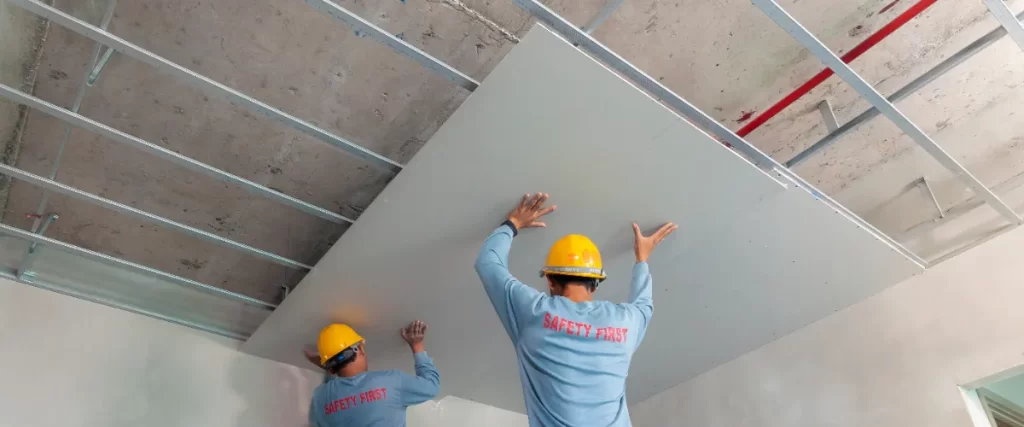
Drywall appeals to many homeowners who want their basement to look like any other finished room. It creates a smooth surface that hides joists, plumbing, and ductwork. The look is familiar, and paint offers endless options. Light colors help brighten a space that typically sits below ground level.
Drywall does bring a permanent feel, which some people appreciate. Once installed, it has strong acoustics and creates a quiet room for a bar, a play area, or a home theater. It does require cutting access panels for anything that might need maintenance later. That works fine in basements with minimal utilities overhead.
Drop Ceilings for Easy Access
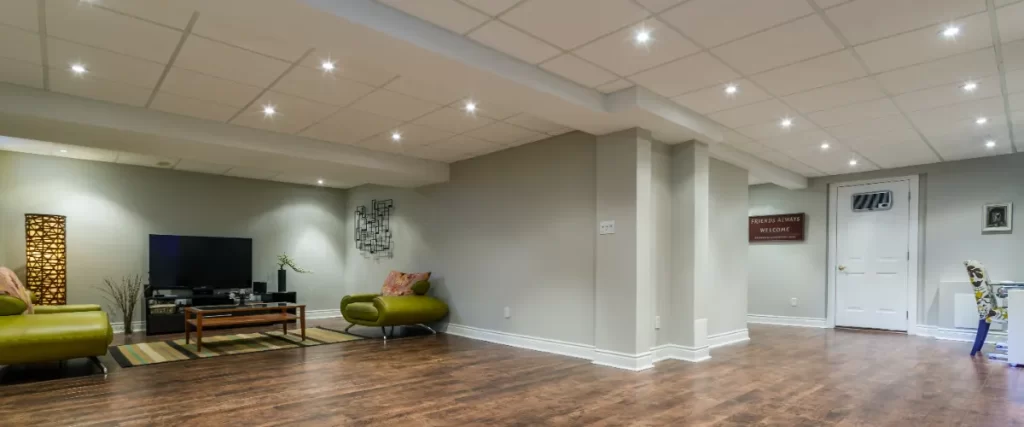
A drop ceiling is common in basements, and for good reason. Homeowners appreciate the ability to lift ceiling tiles whenever they need to reach plumbing, wiring, or ducts. The frame hangs below the joists, which lowers the overall height slightly, yet offers remarkable convenience.
Modern ceiling tiles look far better than the older commercial-style versions people often picture. Lightweight tiles made from polystyrene, mineral fiber, or PVC panels come in many patterns. Some mimic wood or metal and add texture that warms the room. They are simple to replace, so upkeep stays manageable.
Drop ceilings suit moisture-prone basements because many materials resist mold and mildew. PVC panels in particular work well in areas where moisture is more common.
Wood, Planks, and Beadboard for Warmth
Some basements benefit from natural materials that add warmth. Wood planks, beadboard, or tongue-and-groove edge panels create charm. They bring a rustic or contemporary style, depending on the finish.
Wood ceilings pair well with bar areas or gathering rooms. Stains and different colors help match floors and wall finishes. Homeowners who like a cottage or cabin feel often appreciate this option.
If the basement has moisture issues, wood needs protection. Good ventilation and a dry environment keep the material stable. Once installed properly, it creates a cozy ceiling that changes the atmosphere completely.
Coffered Ceilings for Depth and Character
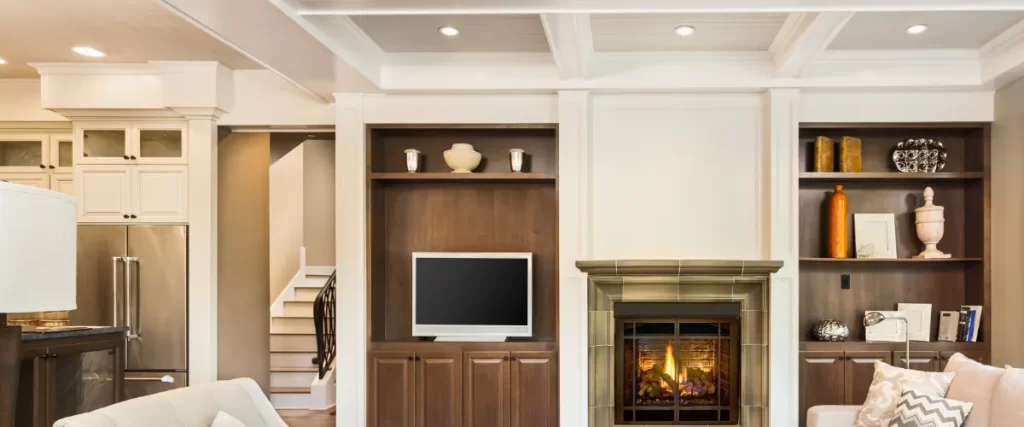
Coffered ceilings offer a sense of craftsmanship. They create visual depth, especially in larger basements that might feel flat without architectural details. Although they cost more than simpler ceiling options, they deliver a memorable appearance.
With coffered ceilings, materials vary from wood to composite. Paint or stain lets you tailor the style. The structure can conceal utilities if the layout allows, though it is less flexible for access than tiles or a drop system.
Exposed Ceilings for an Industrial Look
An exposed basement ceiling suits homeowners who enjoy an industrial style. Leaving joists, pipes, and wires visible creates a loft-like atmosphere. Dark paint ties everything together and hides irregularities. Light colors create a more open feeling. Both approaches depend on how you want the room to feel.
This choice keeps the full ceiling height. It also avoids installation costs and keeps all utilities fully accessible. Some people add furring strips to support select panels or planks in areas where they want partial covering. Others leave everything open and rely on paint and lighting to shape the look.
PVC Panels for Moisture Resistance
PVC panels work well in moisture-prone basements. They resist mold, mildew, and water exposure. They suit laundry rooms, utility spaces, or any area where humidity increases often. Many panels come with patterns that mimic wood planks or other textures.
Installation stays manageable, and maintenance involves simple cleaning. They combine durability with a lighter weight that simplifies handling. They also pair well with drop ceiling systems.
Ceiling Tiles for Design Flexibility
Tiles come in many materials and styles. They can complement almost any design idea. When used within ceiling systems that allow easy access, tiles make upkeep simple. Some tiles help with sound control, which matters in rooms where noise carries.
Different patterns, colors, and textures give you freedom to create the look you want. Some mimic metal with contemporary tones, while others resemble detailed plaster. Tiles also let you experiment. A room with lower ceilings can benefit from lighter colors and subtle textures that create the illusion of more height.
Metal Options for a Contemporary Style
Metal panels or tiles bring a polished, modern appearance to a basement ceiling. Homeowners sometimes choose brushed aluminum or painted steel for a sleek look. These materials reflect light, which helps brighten darker spaces. They also handle moisture well and resist damage.
Metal can be used in drop ceilings or mounted directly with furring strips. Some designs combine metal with wood or other materials for contrast. This approach works well in bar areas or contemporary entertainment rooms.
Factors to Consider Before You Choose
Every basement has unique conditions. If you understand those conditions, choosing a ceiling becomes much easier. Several considerations come up again and again.
- Utility access. Some rooms contain heavy plumbing or HVAC routes. Easy access matters.
- Moisture level. A dry basement offers wider choices. A damp space benefits from PVC panels, tiles, or other moisture resistant materials.
- Style. Industrial, rustic, contemporary, and classic designs each point toward different ceiling types.
- Installation. Some homeowners want easy installation. Others prefer a finished look even if it requires more work.
- Cost. Basic drywall often costs less, while coffered ceilings or specialty materials cost more.
- Acoustics. Ceiling tiles and certain planks help soften sound.
Natural light usually runs low in basements. Using reflective materials, lighter paint, or textured tiles helps brighten the room. Ceiling height also matters. Drop ceilings reduce height slightly, so exposed ceilings or drywall might work better in shallower spaces.
Balancing Appearance and Function
Every option brings benefits. Tiles offer flexibility. Wood brings character. Drywall makes a basement feel complete. Exposed joists create interest and keep everything reachable. PVC handles damp conditions with ease. Metal suits homeowners who appreciate contemporary design.
Think about how the room extends into the rest of the home. A game room or home theater might benefit from strong sound control. A workshop may require fast access to pipes and wires. A guest room needs a quiet, warm feeling, and a bar might need decorative depth.
Each ceiling option works with different basement layouts. Lower ceilings might benefit from smooth drywall or light tiles. Taller basements can hold coffered designs that show more depth. Rooms with complex ductwork usually benefit from drop systems because maintenance becomes simpler.
Making the Basement a Comfortable Extension of the Home
A finished basement adds a great deal of usable space. The ceiling plays a major role in making it feel comfortable. Homeowners often combine materials, such as exposed beams with selected panels, or drywall in one section and tiles in another. This flexibility supports unique layouts and different room purposes.
If you want a ceiling that helps conceal utilities without giving up easy access, drop ceilings provide a practical solution.
If the goal is warmth, wood planks or beadboard create it instantly. When moisture causes concern, PVC panels or specific tiles help keep the room in good shape.
Metal or coffered ceilings bring a distinctive style. Drywall ties everything together when you want a calm, simple look.
Conclusion
Choosing the right basement ceiling takes time, especially when you need to account for pipes, ducts, moisture, and overall appearance.
Many homeowners prefer to let professionals handle the planning and installation, because every basement brings its own challenges, whether the home is in Pasadena, Anne Arundel County, Maryland, or elsewhere.
If you want help transforming your space, call us at (443) 261-9582 or message us here. For more ideas about basement ceiling options and remodeling services, you can also explore the offerings on our basement remodeling page.