
Choosing the right basement flooring can completely transform how you use that space. Most basements start as cold, unwelcoming concrete slabs, but with the right materials, they become family rooms, home gyms, playrooms, or entertaining areas. The challenge is finding flooring that handles moisture problems while still looking great and feeling comfortable underfoot.
Basements present unique challenges that upper floors don’t face. Moisture seeping through concrete, dampness from humidity, and temperature fluctuations all affect which materials will work long-term. Some homeowners opt for the cheapest solution and regret it later when mold appears or tiles crack. Understanding your basement’s specific conditions helps you make a choice that lasts.
Why Basement Floors Need Special Consideration
Below-grade spaces behave differently than the rest of your house. Concrete naturally absorbs moisture from the ground, and even homes with good drainage systems can have humidity issues. Traditional hardwood that works beautifully on your main floor might warp and buckle in a basement within months.
Temperature matters too. Basements tend to feel cold, especially in winter. Walking barefoot on certain materials becomes uncomfortable, which affects how much you actually use the space. Some flooring types provide better insulation than others, adding warmth without requiring extra heating.
Luxury Vinyl Plank: A Top Choice
Vinyl plank flooring has become incredibly popular for basements, and there are good reasons why. Modern luxury vinyl plank looks remarkably similar to real hardwood while offering superior water resistance. Many products now come with a built-in vapor barrier, which adds protection against moisture coming up from the concrete.
Installation is straightforward. Most vinyl planks use a click-lock system that floats over the subfloor. You can install it yourself if you’re handy, though professional installation ensures proper acclimation and spacing. The material stays stable even when humidity levels change, which happens frequently in basement environments.
Vinyl feels warmer than tile or concrete. It has a slight give underfoot that improves comfort, especially if you’re standing for extended periods. Maintenance is simple, too. Regular sweeping and occasional mopping keep it looking new for years.
Ceramic and Porcelain Tiles: Built to Last
Ceramic or porcelain tiles give you unmatched durability. These materials handle water better than almost anything else, making them excellent choices for basements prone to occasional dampness. Porcelain tiles are denser than ceramic tiles, which means they absorb even less moisture.
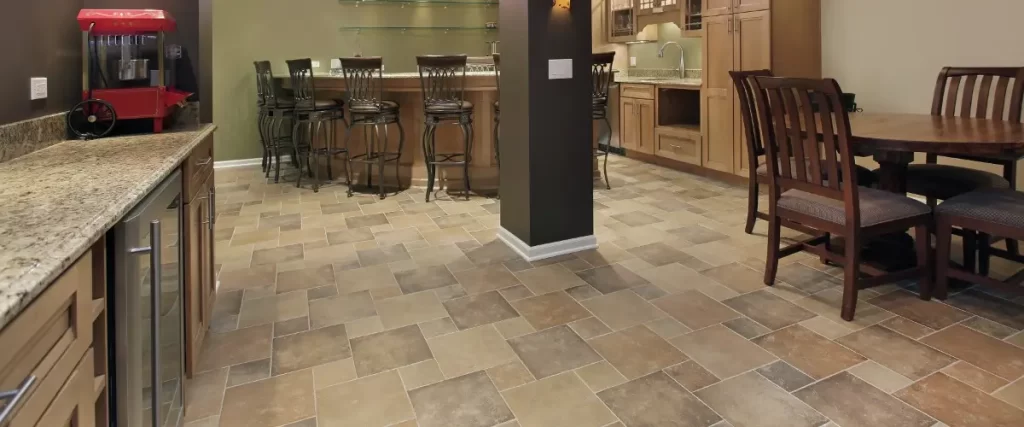
The design appeal is significant. Tiles come in countless styles, from patterns that mimic natural stone to sleek modern looks. Large-format tiles reduce grout lines, giving a more seamless appearance. You can also mix different tile sizes or create custom patterns that match your basement space perfectly.
One downside is temperature. Tile floors feel cold unless you install radiant heating underneath. Some homeowners solve this by adding area rugs in main walkways or seating areas. The hardness of tile can also be tough on joints if you’re standing a lot, though highly durable materials always involve some trade-offs.
Engineered Hardwood: Real Wood Without the Risk
Engineered hardwood gives you the look of real hardwood with better moisture resistance. Unlike solid hardwood, which expands and contracts dramatically with humidity changes, engineered products use multiple layers that stay more stable. The top layer is genuine wood, so you get authentic wood grain and warmth.
Proper installation requires attention to moisture levels. You need a vapor barrier between the concrete and the flooring, and the basement should maintain relatively consistent humidity. Test your concrete’s moisture content before installation. If levels are too high, engineered hardwood might still not be the best floor for your situation.
The warmth and aesthetics make engineered wood worth considering. It adds value to your house and makes basements feel like natural extensions of your living space rather than afterthoughts. Just be realistic about your basement’s moisture situation before committing.
Carpet Tiles: Comfort and Flexibility
Carpet tiles offer a middle ground between full wall-to-wall carpets and hard surfaces. These interlocking tiles install easily and can be replaced individually if one gets stained or damaged. Basements used as playrooms or family rooms benefit from the soft surface, which reduces noise and provides cushioning for kids.
Modern carpet tiles resist mold and mildew better than traditional carpet. Many are made from synthetic materials that dry quickly if they get wet. Still, carpet isn’t ideal if your basement has serious moisture problems. Even resistant materials can develop issues with prolonged dampness.
The comfort factor is real. Carpet feels warm underfoot and creates a cozy atmosphere that hard surfaces can’t match. Installation takes just a few hours, and you can create patterns or mix colors to add visual interest to a large space.
Rubber Flooring: Perfect for Active Spaces
Rubber flooring works beautifully for home gyms or any basement where durability matters most. It absorbs impact, protects your concrete subfloor, and handles dropped weights or exercise equipment without damage. Interlocking tiles make installation simple, and you can reconfigure the layout anytime.
The industrial look isn’t for everyone. Rubber flooring comes in limited colors and styles compared to other materials. But if function matters more than aesthetics, rubber delivers. It’s water-resistant, easy to clean, and nearly indestructible.
Rubber also reduces noise significantly. If your gym sits below living spaces, rubber flooring keeps sound from traveling upward. The cushioning reduces strain on joints during workouts too, which makes exercise more comfortable.
Epoxy Coatings: Transform Your Concrete
Epoxy coatings let you keep your existing concrete floor while making it smooth, attractive, and more moisture-resistant. Professional epoxy applications create a seamless surface that’s easy to maintain and highly durable. Colors and patterns can match any style, from clean modern looks to decorative flakes or metallic finishes.
Preparation matters immensely. The concrete needs proper cleaning and sometimes grinding before epoxy application. Any existing cracks should be repaired. Done correctly, epoxy floors last for decades and handle spills without staining.
The slickness when wet is one consideration. Textured additives help with traction, but epoxy stays smoother than most materials. For entertainment areas or light-use basements, this works fine. For high-traffic family spaces, you might prefer something with more grip.
Making Your Decision
Your basement’s moisture levels should guide your choice more than anything else. Test your concrete before deciding. If you have persistent dampness, stick with vinyl, tile, or rubber. These materials tolerate wet conditions without failing.
Think about how you’ll use the space. Home gyms need different flooring than entertaining areas. Playrooms benefit from softer materials that reduce noise, while rooms focused on aesthetics might prefer wood-look vinyl or engineered hardwood.
Budget plays a role, too. Some materials cost more upfront but require less maintenance over time. Vinyl and carpet tiles tend to be affordable and easy to install yourself, which reduces overall costs. Tile and engineered hardwood usually need professional installation, which adds to the expense but ensures proper technique.
Let Us Handle Your Basement Flooring
Reading about all these basement flooring options probably feels overwhelming. Each material has advantages, installation requirements, and situations where it works best. Making the wrong choice means wasting money and potentially dealing with moisture problems, mold, or flooring that fails within a few years.
Rather than tackle this project yourself and worry about vapor barriers, moisture testing, and proper installation techniques, why not work with professionals who handle basement floors regularly? We understand how basements behave, which materials work in different conditions, and how to install everything correctly the first time.
Our team helps you evaluate your basement space, test for moisture issues, and recommend flooring that matches both your needs and budget, whether the home is in Pasadena, Anne Arundel County, or the surrounding areas.
We handle the entire basement remodeling process, so you don’t have to research techniques or rent specialized tools. You get a finished basement floor that looks great and lasts for years without the stress of doing it yourself.
Ready to transform your basement with new flooring? Call us at (443) 261-9582 or message us here to discuss your project. We’ll help you find the perfect flooring solution for your space.