
Porcelain tile is the most dependable bathroom flooring choice for most homeowners, and it’s held that position for good reason.
Water resistance, durability, easy cleaning, and a vast range of styles make it the default that professionals reach for. That said, the best flooring for your bathroom depends on how the space is used, what your budget allows, and what you’re willing to maintain over time.
Luxury vinyl has genuinely closed the gap in recent years, and in the right bathroom, it makes more sense than tile. Laminate and natural wood are trickier in high-moisture areas, and carpet belongs nowhere near a shower.
Here’s how the main options compare before we go into each one.
| Material | Water Resistance | Durability | Cost Installed | Best For |
| Porcelain tile | Excellent | Excellent | $5–$15/sq ft | Most bathrooms |
| Ceramic tile | Very good | Very good | $3–$10/sq ft | Powder rooms, lower traffic |
| Luxury vinyl tile/plank | Excellent | Good | $3–$8/sq ft | Budget-conscious remodels |
| Natural stone | Good, with sealing | Excellent | $10–$30/sq ft | High-end bathrooms |
| Sheet vinyl | Good | Moderate | $1–$4/sq ft | Basic budget bathrooms |
| Laminate | Poor | Moderate | $3–$7/sq ft | Powder rooms only |
| Wood | Poor | Poor in wet areas | $8–$15/sq ft | Not recommended |
Tile Floors: Why the Standard Hasn’t Changed
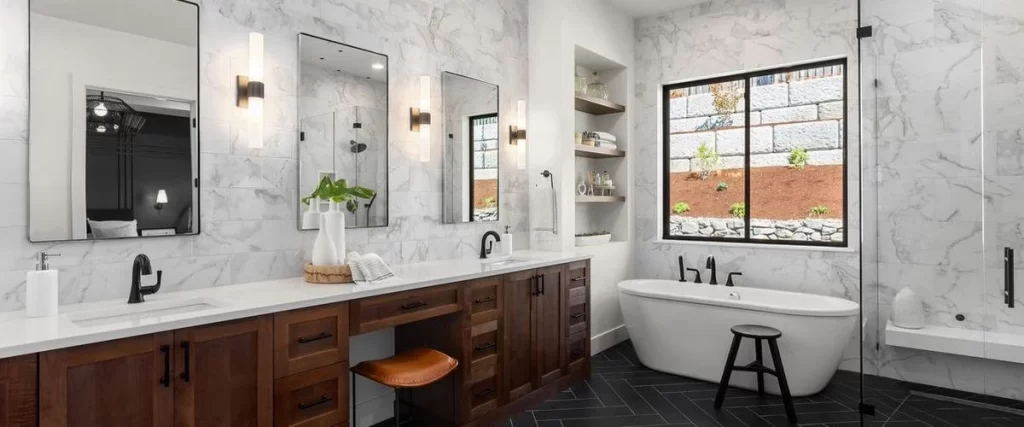
Porcelain and ceramic tile dominate bathroom flooring because they genuinely earn it. Both are moisture-resistant, long-lasting, and available in an enormous range of finishes, from classic white tiles to large-format slabs that visually expand a smaller bathroom. Porcelain is denser and less porous than ceramic, which matters in shower floors and rooms with consistently high humidity. Ceramic is a strong choice for a powder room or lower-traffic bathroom where that extra density matters less, and its lower cost per square foot makes it easier to stay on budget during a remodel.
Grout lines deserve some attention here. In wet areas, grout collects mildew if it goes unsealed, but an annual grout sealer keeps that in check without much effort. Choosing larger tiles means fewer grout lines across the floor, which simplifies cleaning and creates a more cohesive look, especially in larger bathrooms.
The U.S. Access Board’s guidelines on floor and ground surfaces specify that bathroom flooring should be stable, firm, and slip resistant in wet areas. Textured porcelain on shower floors handles this naturally. A smooth, polished tile on a shower floor is a safety issue regardless of how beautiful it looks, so surface texture matters as much as material when choosing tile for wet areas.
For a closer look at how ceramic and porcelain actually differ in technical terms, our post on ceramic vs porcelain tile flooring walks through the comparison in practical detail.
Luxury Vinyl: The Material That Earned Its Place
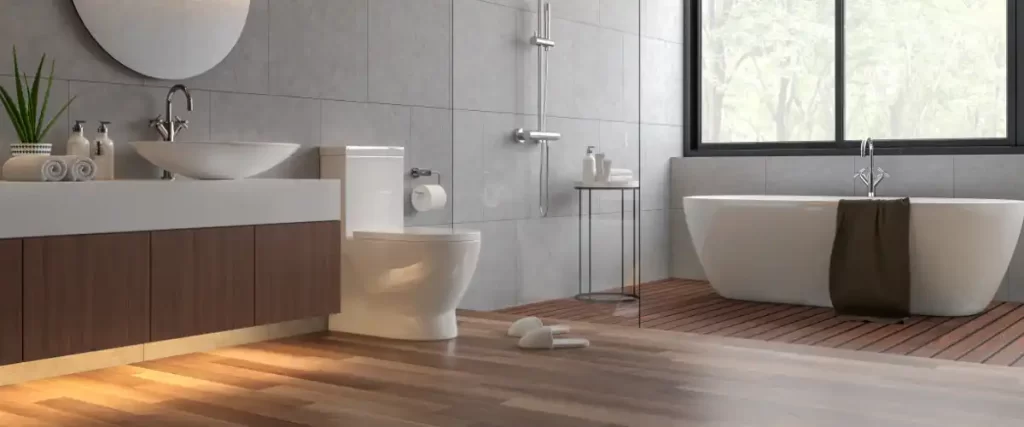
A few years ago, vinyl flooring meant sheet vinyl with visible seams and a look that announced itself as a budget choice. High-quality luxury vinyl products today are a different category entirely. They’re waterproof through the entire plank or tile, comfortable underfoot in a way that cold tile on a winter morning is not, and convincingly realistic in wood and stone looks that hold up well over time.
The practical case for luxury vinyl in a bathroom is hard to argue with:
- Fully waterproof construction handles high moisture areas without the sealing schedule that natural stone demands
- Comfortable underfoot in a way that matters when you’re standing barefoot first thing in the morning
- Realistic wood look without the moisture vulnerability that actual wood flooring brings to a bathroom project
- Lower installation cost compared to traditional tile floors, which can meaningfully affect the overall bathroom remodel budget
The trade-off is long-term durability. Luxury vinyl doesn’t match the lifespan of well-installed porcelain tile, and sharp impacts or heavy objects can damage it in ways tile would shrug off. For a guest bath or powder room remodel where warmth and style matter on a reasonable budget, though, luxury vinyl is a genuinely smart call.
Natural Stone: High-End Look, Honest Maintenance
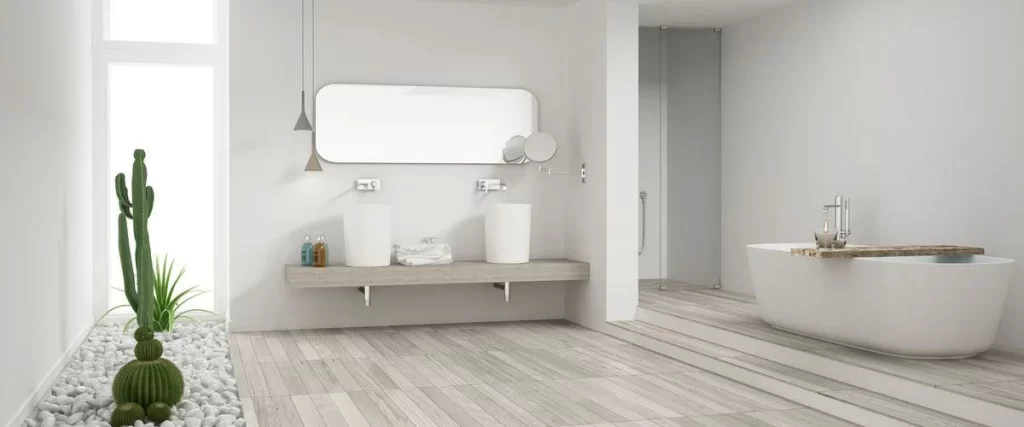
Marble, travertine, and slate bring something to a bathroom that manufactured materials are still working to replicate. The veining, the texture underfoot, the way natural stone ages, all of it is genuinely distinctive. What comes with that aesthetic is a commitment to proper ongoing maintenance that some homeowners underestimate at purchase.
Natural stone is porous. Without periodic sealing, it absorbs moisture and stains, and in a high-humidity bathroom, that exposure is constant. Skipping the sealing schedule leads to damage that is expensive and sometimes irreversible. For a bathroom remodel where you’re already stretching the budget, natural stone can feel like the upgrade that keeps asking for more.
If you’re also weighing stone options for countertops alongside your floor selection, our piece on the pros and cons of quartzite countertops covers material durability and maintenance expectations in a way that applies to the full bathroom material conversation.
Laminate, Wood, and Carpet: The Honest Version
https://stock.adobe.com/ro/images/laminate-flooring-samples-in-interior-design-shop-banner-copy-space/418075320
Laminate flooring can work in a powder room that sees minimal moisture, but in a full bathroom, it’s a calculated risk. The surface is moisture-resistant; the core material is not. Water that finds its way under the planks through seams or edges causes swelling and buckling, and in a bathroom, water always finds a way eventually.
Real wood floors are beautiful, but they are not a practical bathroom flooring option. Moisture warps planks, lifts edges, and encourages mold beneath the surface. The maintenance expectations required to keep wood viable in a high-humidity space make it an uphill commitment most homeowners don’t want after the first few years.
Carpet is a no. It holds moisture, encourages mildew growth, and makes daily cleaning in a bathroom impractical. The conversation ends there.
FAQ
Is porcelain or ceramic better for shower floors? Porcelain is the better choice because of its lower water absorption rate. Smaller tiles with more grout lines also provide better traction on wet shower floors than large smooth tiles, which become slippery when wet, regardless of the material.
Can luxury vinyl go in a full bathroom with a shower? Yes, provided it is a fully waterproof product installed with properly sealed edges and seams kept away from direct water contact. High-quality sheet vinyl without seams near the shower base is also a reliable configuration.
How long does tile flooring actually last in a bathroom? Properly installed porcelain or ceramic tile floors last 20 to 30 years or longer with basic care. Grout will need periodic sealing and eventually regrouting, but the tile itself holds up exceptionally well.
Does bathroom flooring affect home resale value? It does, especially in primary bathrooms. Tile and natural stone tend to add the most perceived value. Sheet vinyl or laminate in a full bathroom rarely contributes meaningfully at resale.
Reading About It Is the Easy Part
Comparing materials, calculating square footage, deciding between grout colors and tile sizes, worrying about whether luxury vinyl holds up in a steam-heavy shower, it all adds up to more time spent researching than actually enjoying a finished bathroom. Most homeowners we talk to have already done three hours of reading before they call us.
We handle bathroom remodels from material selection through final installation, and we know which floors perform well long-term and which ones look great in a showroom but cause problems a few years in.
When you’re ready to stop second-guessing and start building, take a look at our bathroom remodeling services to see what we do and how we approach it. Then call us at (443) 261-9582 or message us here, and let’s talk through your project.