
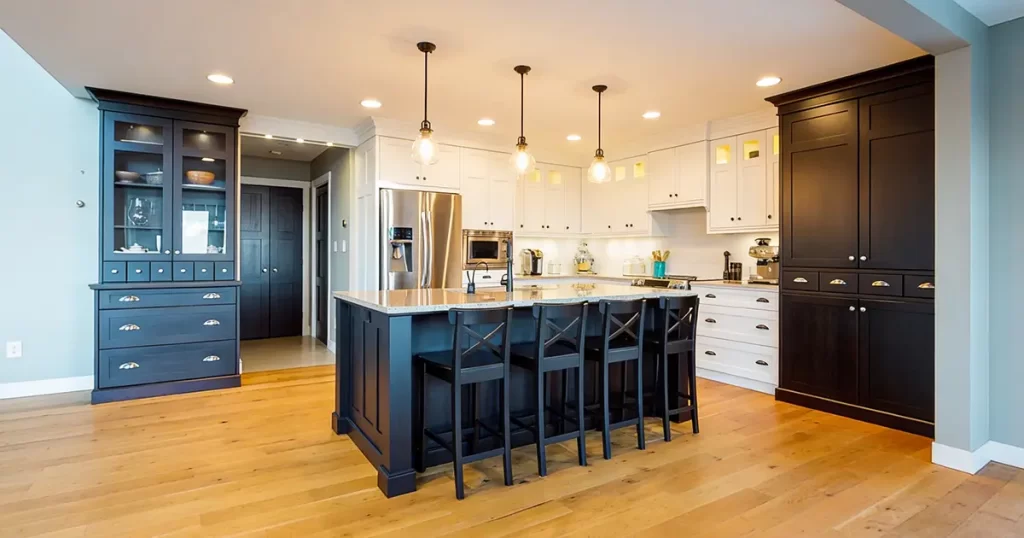
Choosing the best flooring for kitchen spaces takes more than picking a material that looks good. Kitchens deal with spills, heavy foot traffic, dropped pans, and constant cleaning, so the floor has to handle daily wear without becoming hard to maintain.
The best kitchen flooring balances durability, water resistance, comfort, and cost while still matching the style of the home. Understanding the strengths and weaknesses of each flooring type makes it easier to choose a material that will hold up for years.
Which Kitchen Flooring Is Best for Different Needs
Different households need different types of flooring. Looking at how the kitchen is used can help narrow the choice and make it easier to decide which material will perform best over time.
- For heavy cooking and frequent use, tile or vinyl usually performs the best because both handle moisture and wear well.
- For comfort while standing, cork and vinyl are easier on the feet than tile or stone.
- For resale value and appearance, engineered hardwood and natural stone are often preferred.
- For budget-friendly updates, laminate and vinyl offer good performance without the cost of tile or wood.
- For homes with pets or kids, waterproof materials like tile and luxury vinyl are often the safest choice.
After understanding which materials fit your needs, it becomes easier to compare the most popular kitchen flooring options in more detail.
Best Flooring for Kitchen: Most Popular and Reliable Options
There is no single perfect floor for every kitchen. The best choice depends on how the space is used, but these materials are the most common for good reason.
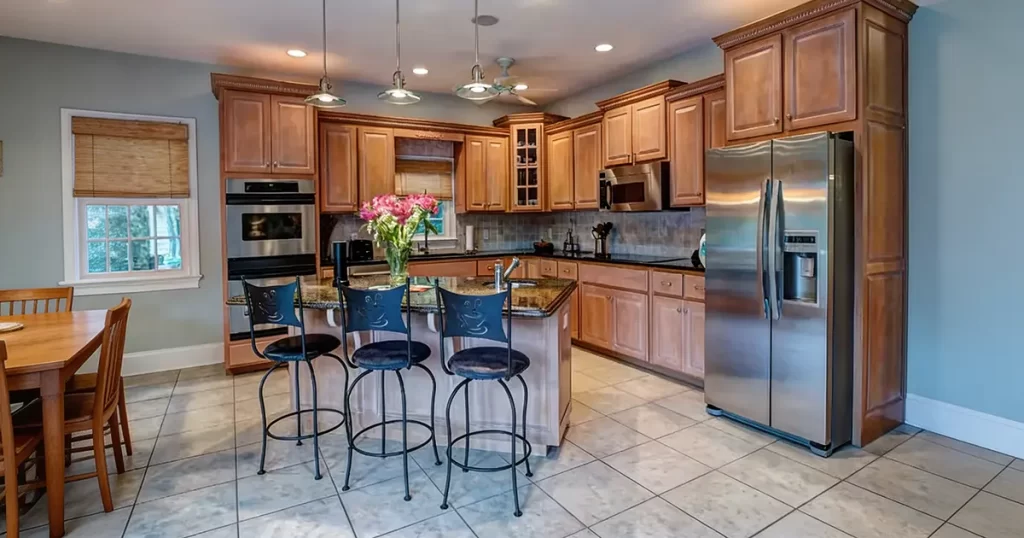
Porcelain and Ceramic Tile
Tile is often considered the most durable kitchen flooring. Porcelain tile is especially strong and resistant to water, stains, and heat. It works well in busy kitchens and homes with pets or children.
One of the biggest advantages of tile is its ability to handle moisture. Spills and steam will not damage it, and cleaning is simple. Tile also comes in many styles, including designs that look like wood or stone.
The downside is comfort. Tile is hard underfoot and can feel cold, especially in colder climates. Grout lines also need maintenance to prevent staining.
Tile is a strong choice for homeowners who want long-lasting flooring that can handle heavy use.
Luxury Vinyl Plank and Sheet Vinyl
Luxury vinyl flooring has become one of the most popular choices for kitchens. It combines durability, comfort, and affordability, which makes it a practical option for many homes.
Luxury vinyl plank and luxury vinyl tile are fully waterproof, making them ideal for kitchens where spills happen often. The material is softer than tile, so it feels more comfortable to stand on for long periods. It also reduces noise and is less likely to break dishes when something falls.
Vinyl flooring can mimic hardwood or stone very realistically, so it fits almost any design style. Installation is usually easier and less expensive than tile or hardwood.
The main drawback is resale value. Vinyl does not add as much value to a home as natural materials, but it performs very well in daily use.
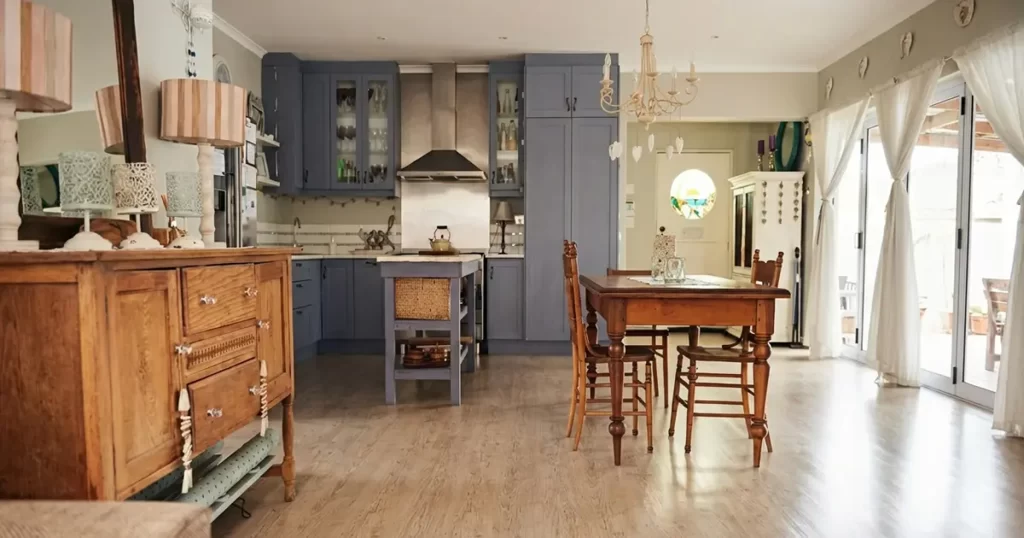
Engineered Hardwood
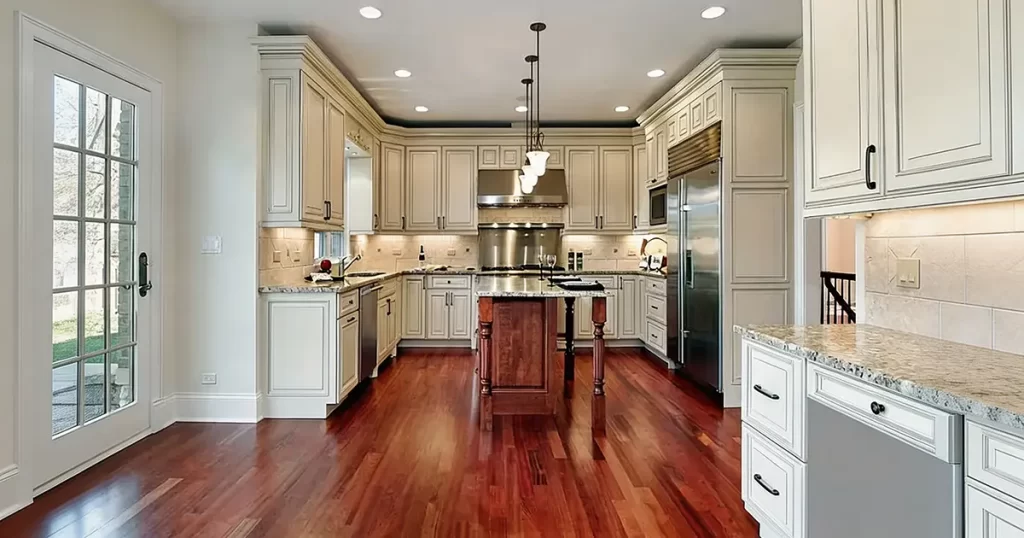
Wood flooring is popular because it adds warmth and character to a kitchen. Solid hardwood can work, but it is sensitive to moisture. Engineered hardwood is usually a better choice because it handles humidity changes more effectively.
Engineered wood has a real wood surface over a stable core, which helps reduce warping. It gives the same natural look as hardwood while being more resistant to kitchen conditions.
This type of flooring is not waterproof, so spills need to be cleaned quickly. It can also scratch more easily than tile or vinyl, especially in busy kitchens.
Engineered hardwood is a good option for homeowners who want the look of wood and are willing to maintain it.
Laminate Flooring
Laminate flooring is a budget-friendly alternative to hardwood. Modern laminate can look very realistic and has a strong wear layer that resists scratches and dents.
It is easier to install than many other materials, which makes it a popular choice for updates and remodels. Laminate also feels warmer and softer underfoot than tile.
The weakness of laminate is moisture. Water can damage the core if it gets into the seams. Some newer products are more water resistant, but they still need careful cleaning.
Laminate works best in kitchens where spills are cleaned quickly and heavy moisture is not constant.
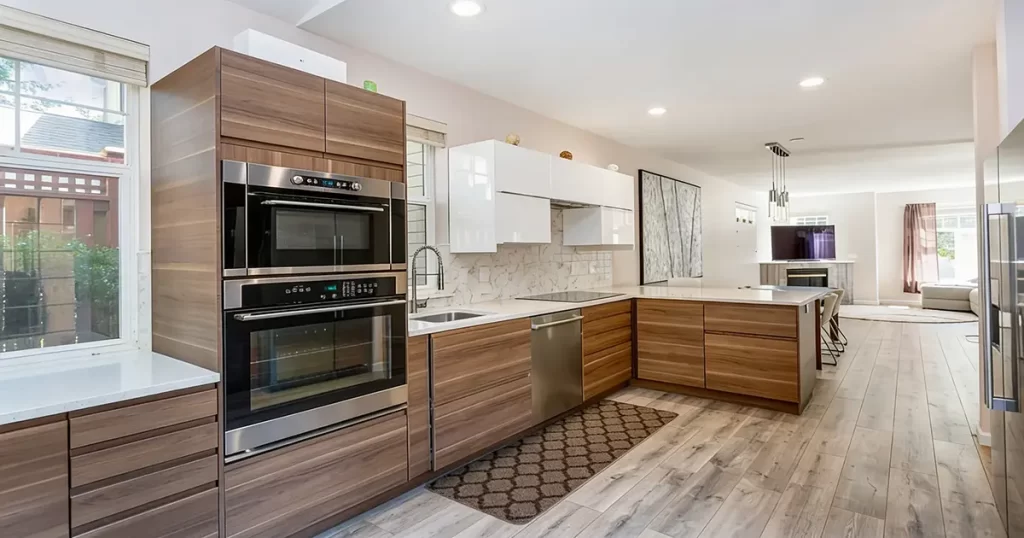
Cork Flooring
Cork is a softer flooring option that provides comfort when standing for long periods. It absorbs sound and has a slight cushion, which makes the kitchen feel quieter and easier on the feet.
Cork is naturally resistant to mold and mildew, and when sealed properly it can handle small spills. It also has a unique look that works well in modern or natural-style kitchens.
The downside is durability. Sharp objects can dent the surface, and the finish may need to be reapplied over time. Direct sunlight can also cause fading.
Cork is a good choice for homeowners who want comfort and a softer feel underfoot.
Concrete and Stone Flooring
Concrete and natural stone are among the most durable flooring options for a kitchen. They resist water, heat, and heavy use better than most materials.
Concrete can be stained or polished to match different styles, while stone offers a natural appearance that adds value to the home. These materials are very long-lasting when installed correctly.
The main drawback is comfort. Both concrete and stone are very hard surfaces, which can make standing for long periods uncomfortable. They are also more expensive to install than many other options.
These floors work best in kitchens where durability is more important than softness.
What to Consider Before Choosing Kitchen Flooring
Once you know the main options, it helps to look at the factors that affect long-term performance. The best flooring for kitchen use should match how the space is used every day.
Moisture resistance should be one of the first things to consider. Kitchens are exposed to spills, steam, and splashes every day. Flooring that absorbs water can warp, swell, or stain over time.
Durability matters just as much. Chairs scrape across the floor, appliances get moved, and heavy cookware can fall. The material should resist dents, scratches, and cracks.
Comfort is important for anyone who cooks often. Hard surfaces can cause fatigue, while softer flooring can make standing easier.
Maintenance also plays a role. Some floors only need regular sweeping and mopping, while others require sealing or special cleaning products.
Budget should always be part of the decision. Material cost and installation cost can vary widely depending on the flooring type.
Choosing Kitchen Flooring That Will Still Work Years Later
The best flooring for kitchen spaces is the one that fits how the room is used every day. Kitchens deal with spills, heavy traffic, and constant cleaning, so the material needs to stay durable without becoming difficult to maintain. A floor that looks good at first but cannot handle daily use often ends up needing repair sooner than expected.
Porcelain tile and luxury vinyl are common choices for busy kitchens because they hold up well against moisture and wear. Engineered hardwood is popular when homeowners want a warmer look, while laminate and cork can work for lighter use. The right option usually depends on how much cooking happens in the kitchen and how much maintenance you want to deal with over time.
In many kitchen remodeling projects, flooring decisions also need to match the layout of the home and connect well with nearby rooms. Choosing the right material early makes the remodel easier and helps the finished kitchen feel more natural to use.
If you are planning a kitchen update and are unsure which flooring will work best for your space, it helps to talk with a contractor who works on kitchen remodels regularly. In many projects around Pasadena, Maryland, Brucksch & Sons Contractors helps homeowners compare flooring options based on durability, layout, and how the kitchen will actually be used, so the finished space stays functional for years.